

Turning Disconnected AI Initiatives into a Unified Customer Experience Vision
A case study in experience strategy, future-state storytelling, and organizational alignment
User need: Self-directed investors wanted more than market data and research tools. They wanted help understanding what mattered, what to do next, and whether they were on the right track.
Business objective: Create a unified vision for how intelligence, insights, and AI-powered guidance should appear across digital experiences while aligning product, technology, design, marketing, and brand teams around a shared direction.
Role: Co-led experience strategy. Facilitated a multi-day design huddle, developed future-state use cases, created interactive prototypes, shaped the experience brand strategy, and crafted executive storytelling used to align stakeholders and leadership.
Key skills: Experience strategy, Design facilitation, Future-state visioning, AI product design, Brand strategy, Storytelling, Systems thinking
Results: Established a shared vision for a unified intelligence experience, influenced roadmap conversations across multiple product teams, clarified investment priorities, and helped leadership evaluate the feasibility, timing, and scope of a future minimum marketable product.
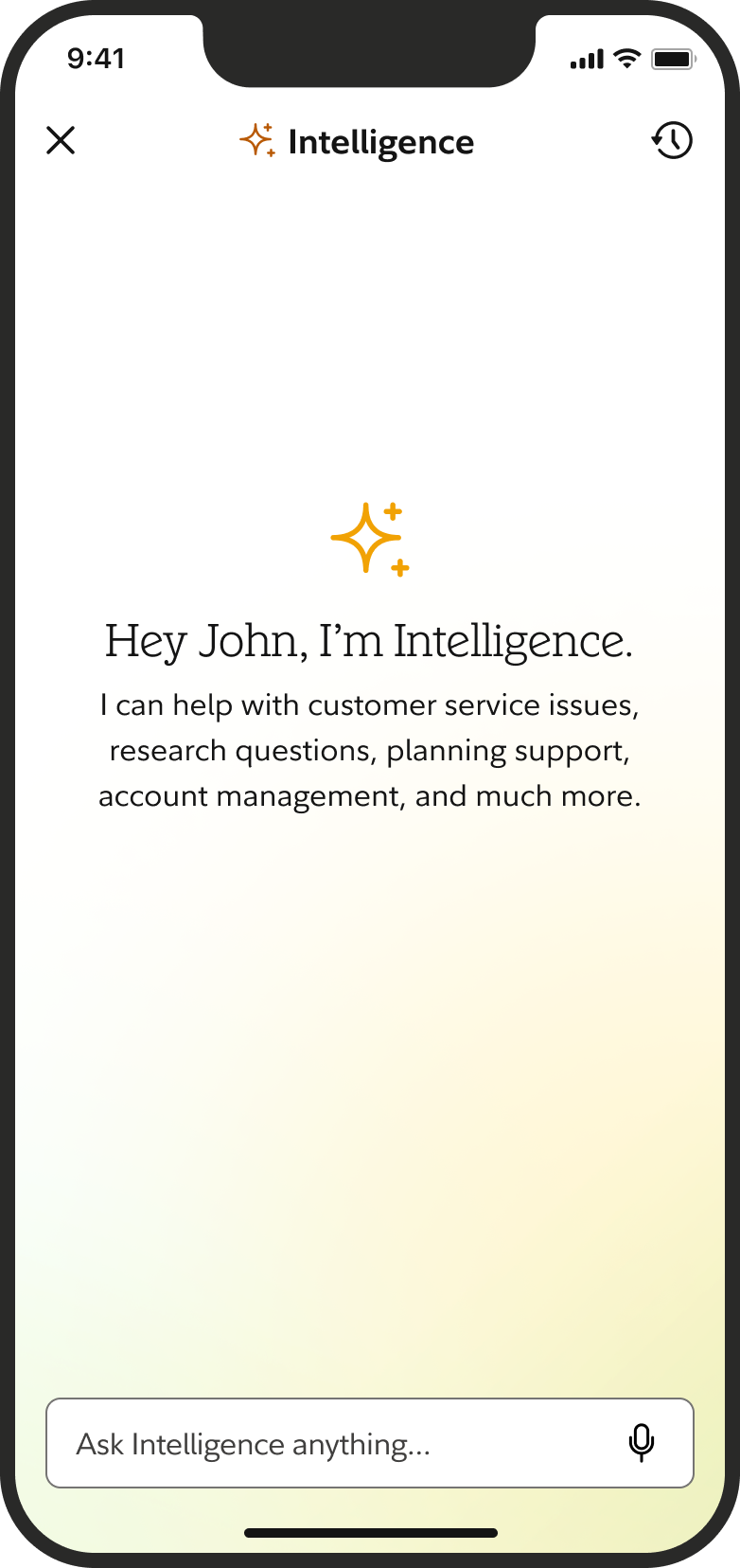
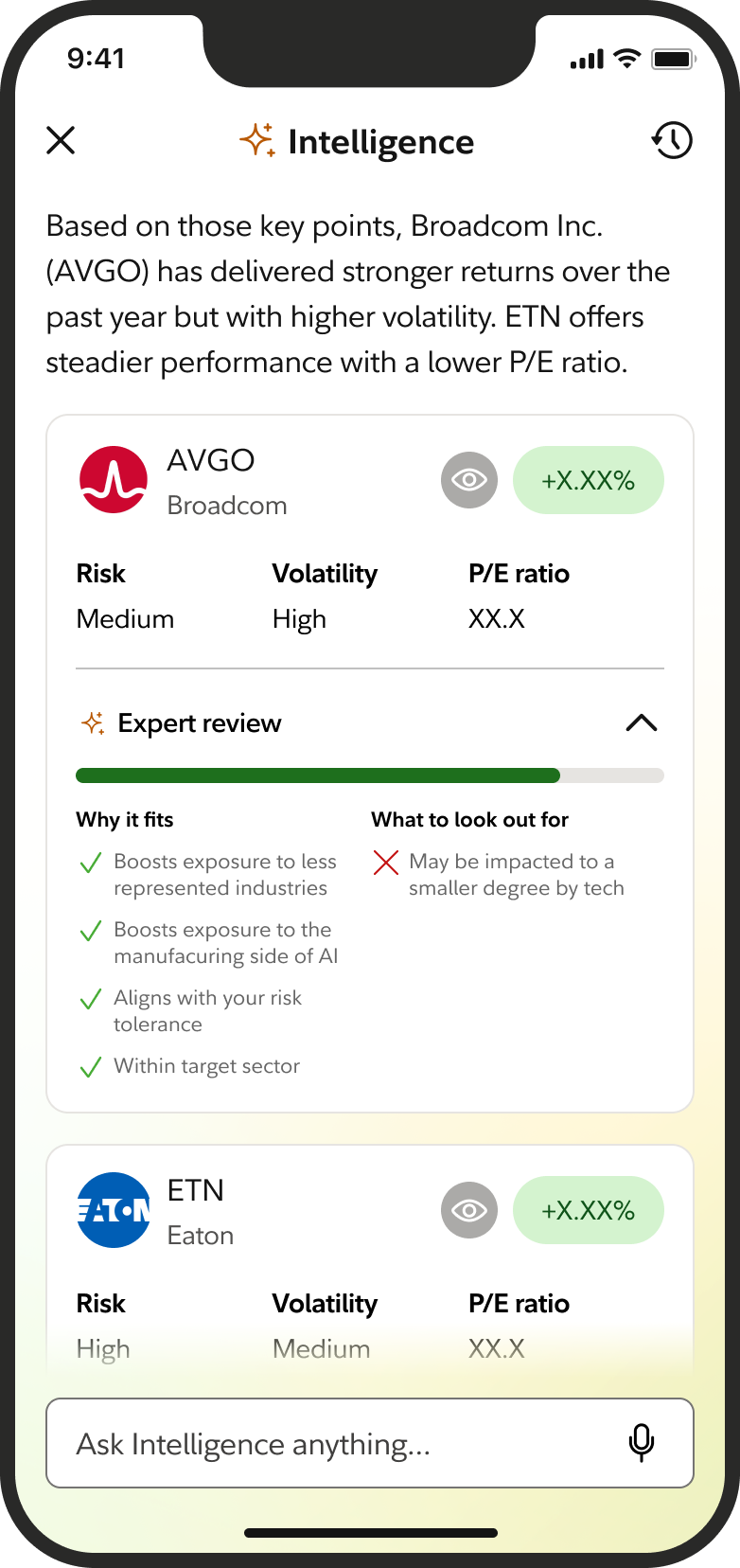
Opportunity
Across the organization, multiple intelligence-related initiatives were emerging at the same time. Individually, many of them were promising. Collectively, they raised uncomfortable questions:
What would customers actually experience?
Were these capabilities solving the same problem?
How would they work together?
Were we creating one coherent vision or several competing ones?
What would make this feel unique and valuable rather than a collection of AI features?
Without clear answers, we risked creating fragmented experiences and fragmented customer expectations.
The opportunity was to create a shared vision for what an intelligence-driven experience could become.
Process
Making sense of the chaos
One of the first challenges was understanding the space we were operating within.
We analyzed:
Existing and planned intelligence capabilities
Customer research
Market trends and competitive offerings
Emerging AI experiences
Internal product initiatives
What we learned was that customers weren't asking for AI specifically—they want answers to questions like:
"How am I doing?"
"What am I missing?"
"What should I do next?"
Strategic insight
Customers wanted their financial services company to highlight the key points and make sense of the data already on the page (and across pages) so that they could make better decisions with greater confidence.
That realization became an important anchor for the work moving forward.
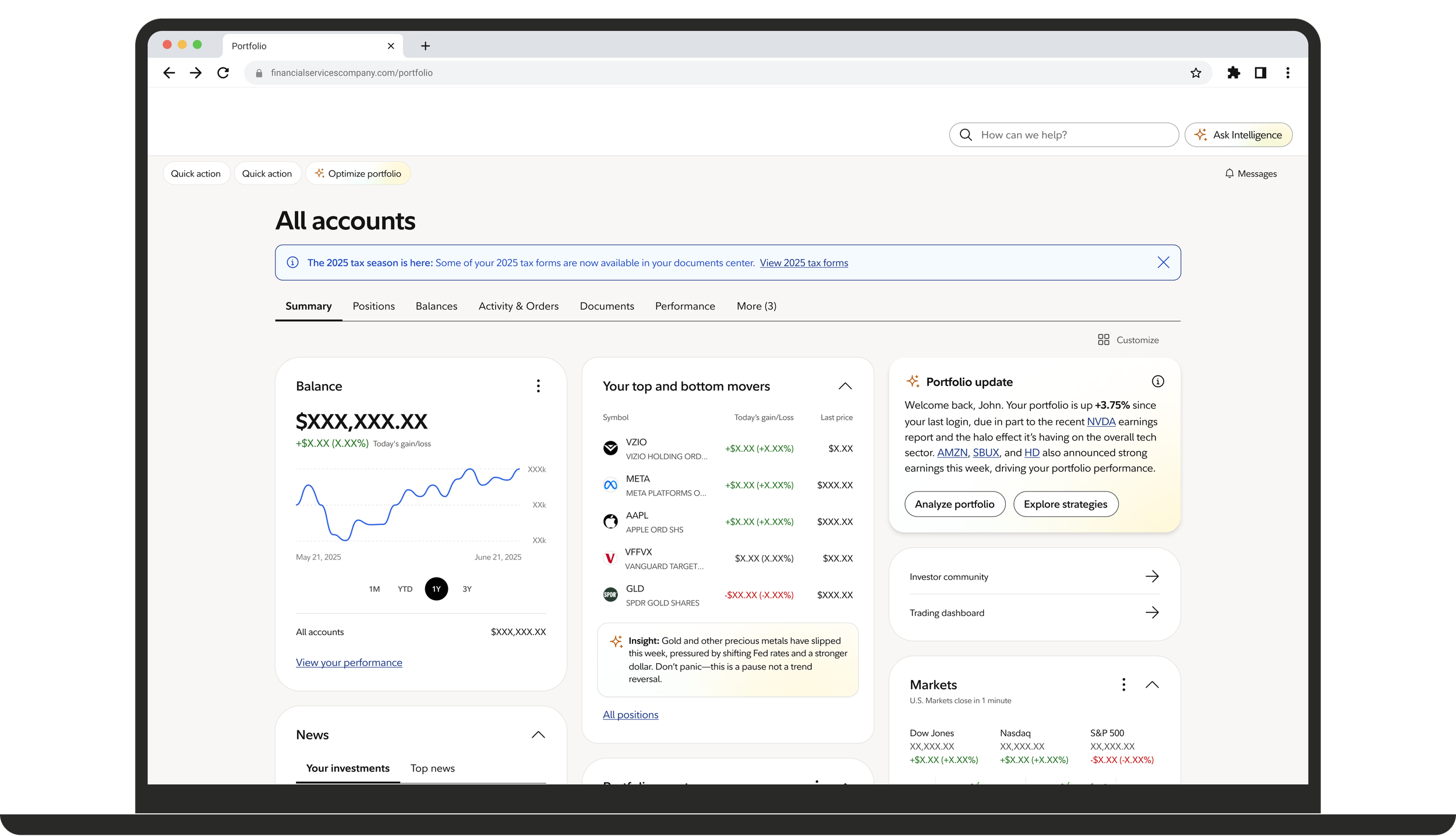
Examples of intelligence delivered in context of existing content
Turning vague ideas into something people could see
This is my favorite kind of design problem.
An organization often knows something important is happening. It can feel the opportunity. It can even describe pieces of it. But nobody can quite see the whole thing.
My role was helping make that future visible.
To do that, I facilitated a multi-day design huddle that brought together partners from product, technology, marketing, design, and brand. The goal: use storytelling to encourage holistic experience design.
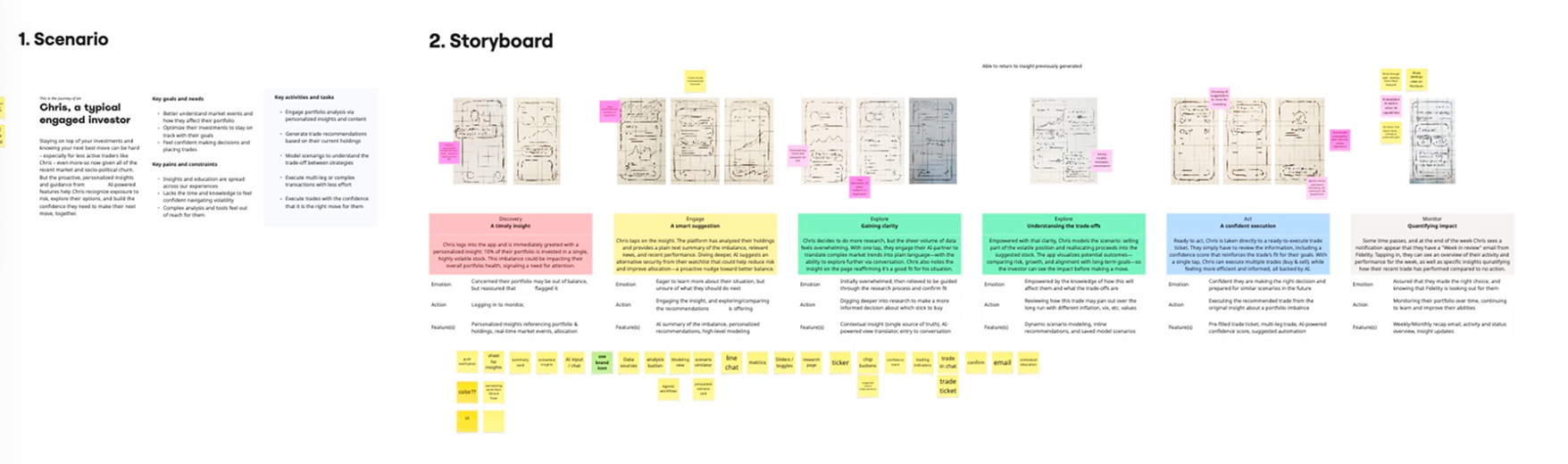
Example scenario and storyboard from design huddle
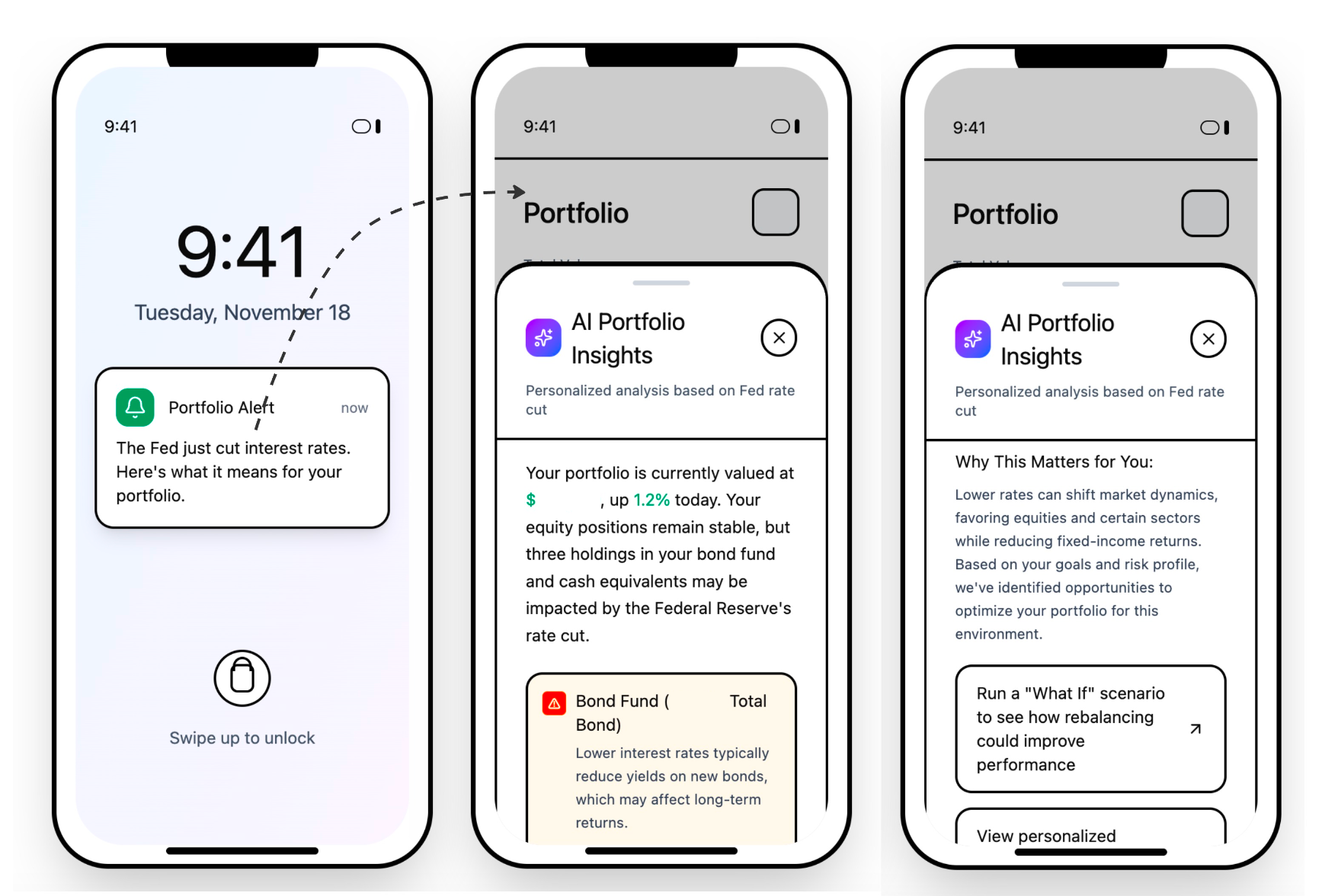
Example AI-powered sketch from storyboard. Participants were encouraged to use traditional, digital, or AI-powered sketch tools.
By the end of those sessions, we weren't discussing isolated features anymore. We were discussing a connected experience.
Brand and experience are the same conversation
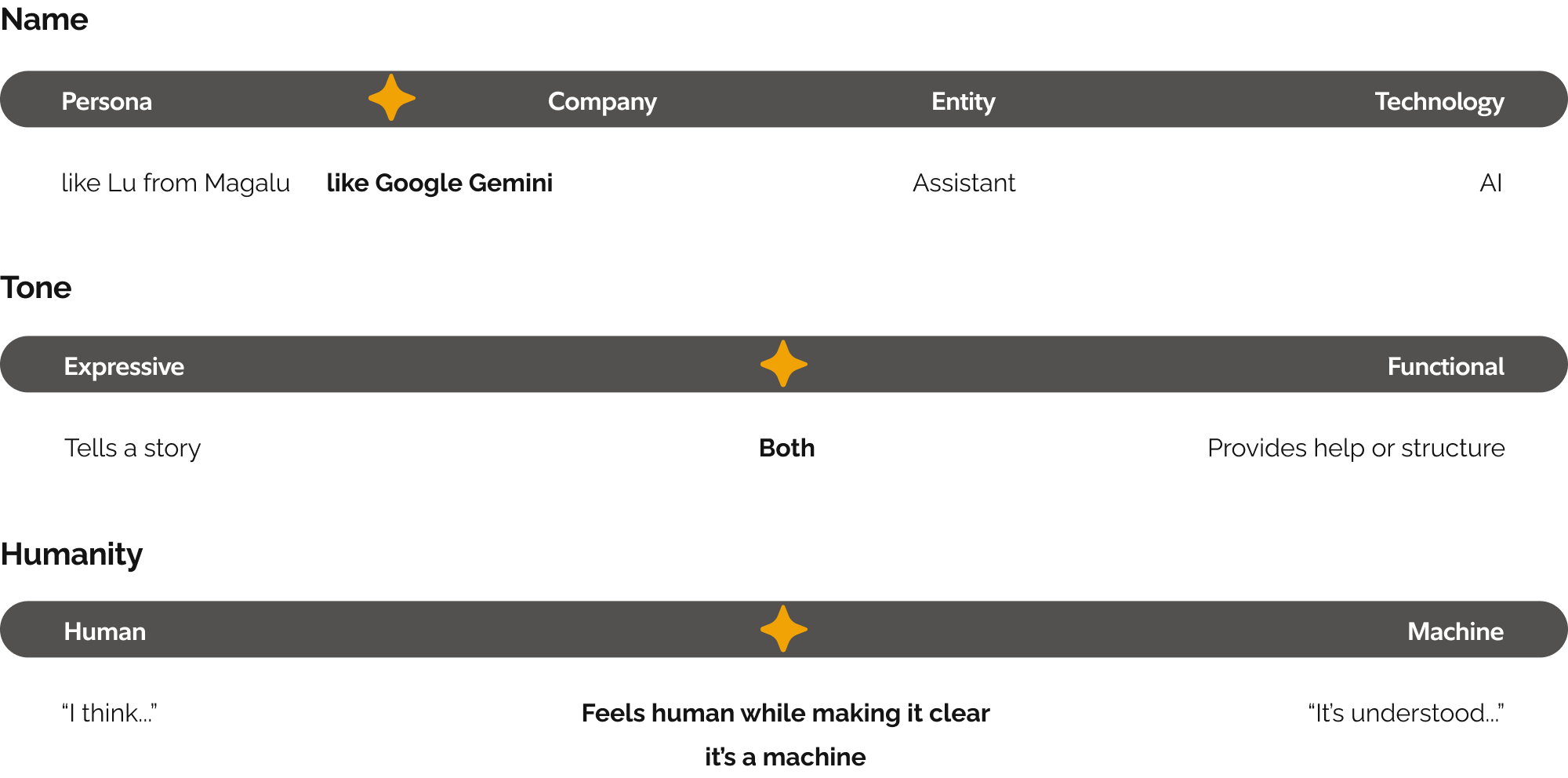
One of the areas I spent significant time on was exploring how brand and experience could work together.
Too often, experience teams define functionality while brand teams define messaging later. We approached the challenge differently. If intelligence was becoming a major value proposition, then how that intelligence behaved was part of the brand itself.
We explored:
Naming approaches
Personality characteristics
Trust signals
Conversational behaviors
Visual language
Customer expectations
The result was a more cohesive vision where experience and brand reinforced one another rather than operating independently.
The shift that changed everything
About halfway through the effort, something unusual happened.
We had been collaborating most closely with teams that were either in the midst of prototyping MVP or POC intelligence experiences. They were responsible roadmaps that were already defined. So we found the feedback we were getting was in line with what we could do in the short-term, rather than answer the question, "what would a genuinely great intelligence experience look like?"
Thanks to our executive sponsors, we were able to pause and restructure our stakeholder group so that we could get meaningful feedback focused at the right altitude. That shift gave us permission to think beyond individual capabilities and consider larger experience implications like:
How intelligence should behave
How it should build trust
How it should guide customers
How it should feel across channels
How it should reflect the brand
Future-state storytelling
Once the vision started to take shape, we needed a way to make it real.
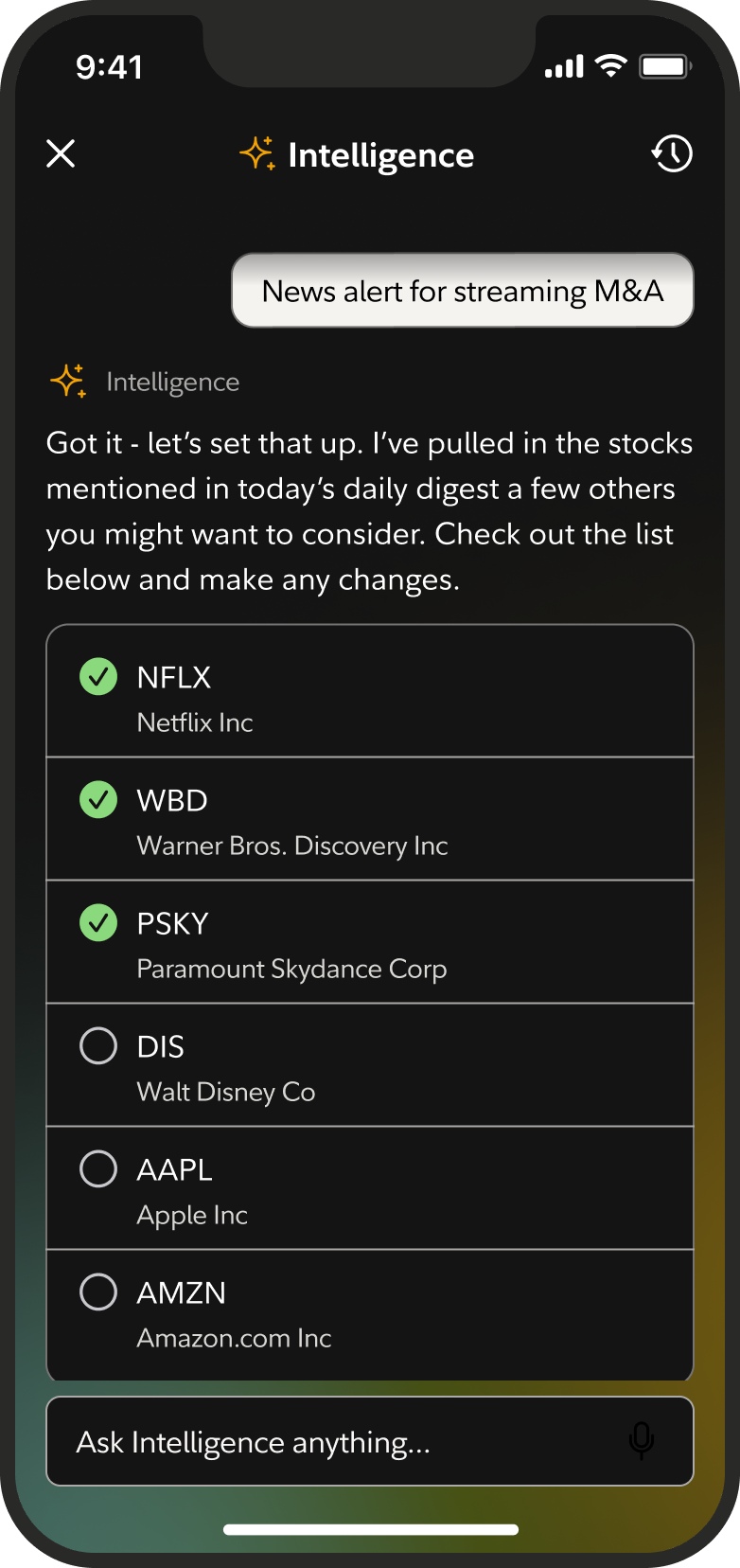
We developed a series of future-state customer narratives and prototypes that demonstrated how intelligence could support different types of investors across a variety of situations. Rather than showcasing technology, the stories focused on customer outcomes.
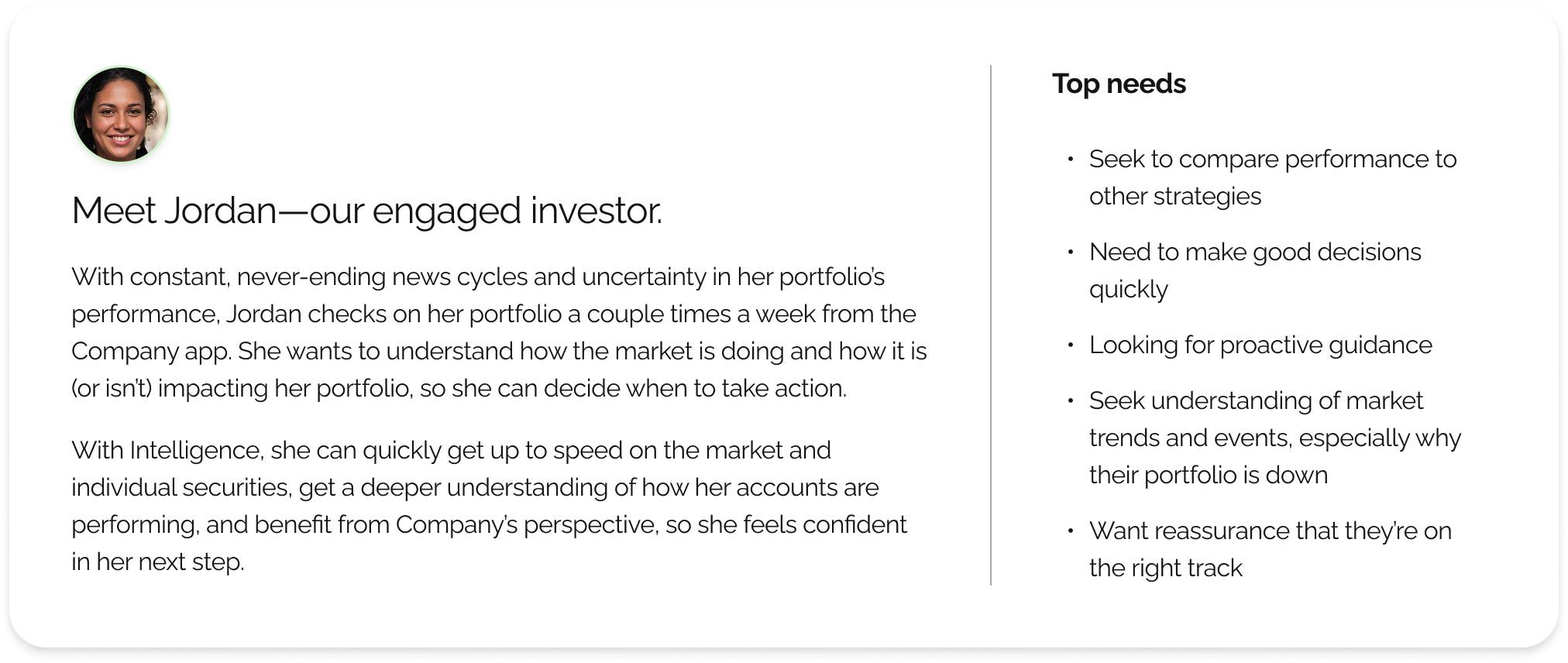
Example of persona narrative with top user needs of engaged investor archetype
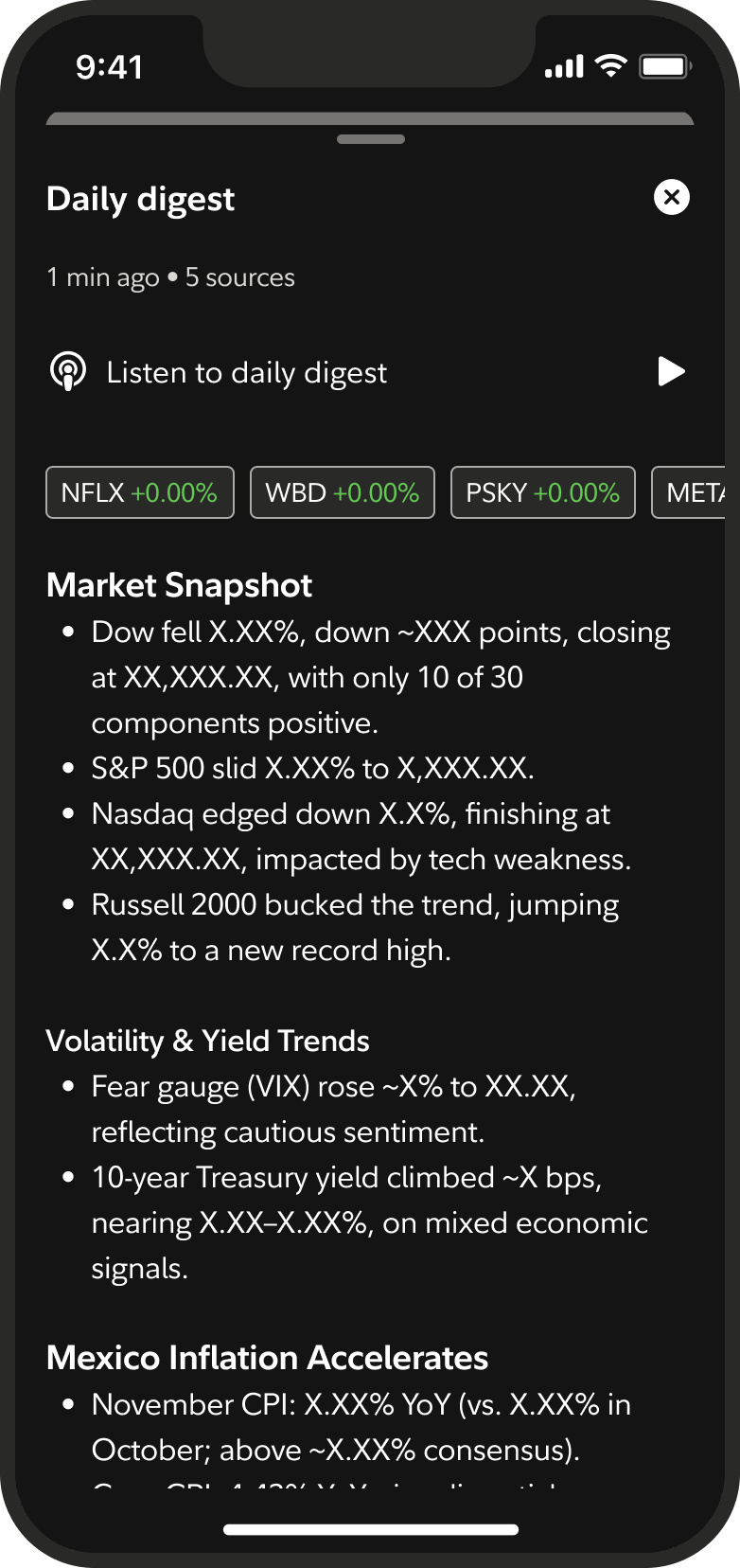
The prototypes helped stakeholders move from abstract discussions about AI to concrete conversations about customer value.
The executive conversation
One of the most important outcomes of the vision work wasn't excitement. It was realism.
The prototypes and future-state concepts helped leadership better understand the scope of the opportunity and the complexity involved in delivering it well.
Conversations became more concrete and teams could discuss:
Feasibility
Timing
Dependencies
Capacity
Investment levels
Roadmap priorities
Instead of debating hypothetical possibilities, leaders had a shared artifact that grounded decision-making.
Results
The work helped create alignment around a shared direction for future intelligence experiences and influenced strategy discussions across multiple teams.
Key outcomes included:
Established a unified vision across product, technology, marketing, brand, and design partners
Influenced roadmap planning and prioritization conversations
Created clarity around organizational AI investment opportunities
Provided leadership with a realistic understanding of future-state scope and implementation complexity
Defined experience principles and capability frameworks that connected individual initiatives into a broader strategy
Created future-state prototypes that enabled more concrete feasibility and planning discussions
Strengthened alignment between brand strategy and experience design
The biggest lesson from this work wasn't about AI. It was about clarity.
Organizations rarely struggle because they lack ideas. They struggle because they have too many ideas moving in different directions.
Sometimes the most valuable contribution design can make is helping people see the bigger picture.
This project reinforced something I've come to appreciate throughout my career: when design can make complexity understandable, connect strategy to experience, and transform vague possibilities into something tangible, it becomes much easier for organizations to move forward with confidence.